


Sports: CBD and muscle recovery, biomarkers against feeling
Muscle recovery has become a central issue for athletes, whether amateur or professional. Between muscle pain, fatigue, sleep and inflammation, many strategies are used to accelerate the return to training.
Cannabidiol (CBD) is one of the solutions that more and more athletes are talking about. But what do scientific studies actually say about its effectiveness in muscle recovery?
- What do systematic reviews and clinical trials say about CBD for muscle recovery?
- How does CBD affect muscle recovery?
- What forms and doses of CBD have been tested?
- Is the CBD safe for a sportsman?
- How to test CBD for your own muscle recovery?
- What the field experience teaches us
- Where to find a reliable CBD?
What do systematic reviews and clinical trials say about CBD for muscle recovery?
Available scientific data on CBD and post-exercise recovery are still limited. Several studies have studied its influence on pain, inflammation, sleep or some biological markers associated with recovery.
A recent review published in the scientific literature analyses available data on the use of cannabidiol in sport and recovery. See scientific publication .
However, the available results do not suggest that CBD directly accelerates muscle recovery in all athletes. The observed effects may include pain perception, sleep quality or general comfort after exercise.
Another study on post-exercise recovery also examined the potential effects of cannabidiol and stressed that the results should be interpreted with caution. See study .
The available data therefore show a possible gap between the subjective feelings of some users and the biomarkers measured in clinical trials.
How does CBD affect muscle recovery?
Cannabidiol interacts indirectly with different biological systems, including the endocannabinoid system. It participates in several physiological functions such as pain perception, sleep, mood and some mechanisms related to inflammation.
CBD, however, does not act as a classic anti-inflammatory drug. Its potential influence on inflammatory processes and pain is still being investigated.
In the context of sport recovery, the potential interest of CBD could therefore be more concentrated in certain indirect recovery factors, such as comfort, perception of curvature or sleep, rather than in directly demonstrated muscle repair.
Scientific work on the mechanisms of action of cannabidiol provides a better understanding of these different biological interactions.
A summary of available mechanisms and data can also be consulted in the scientific literature.
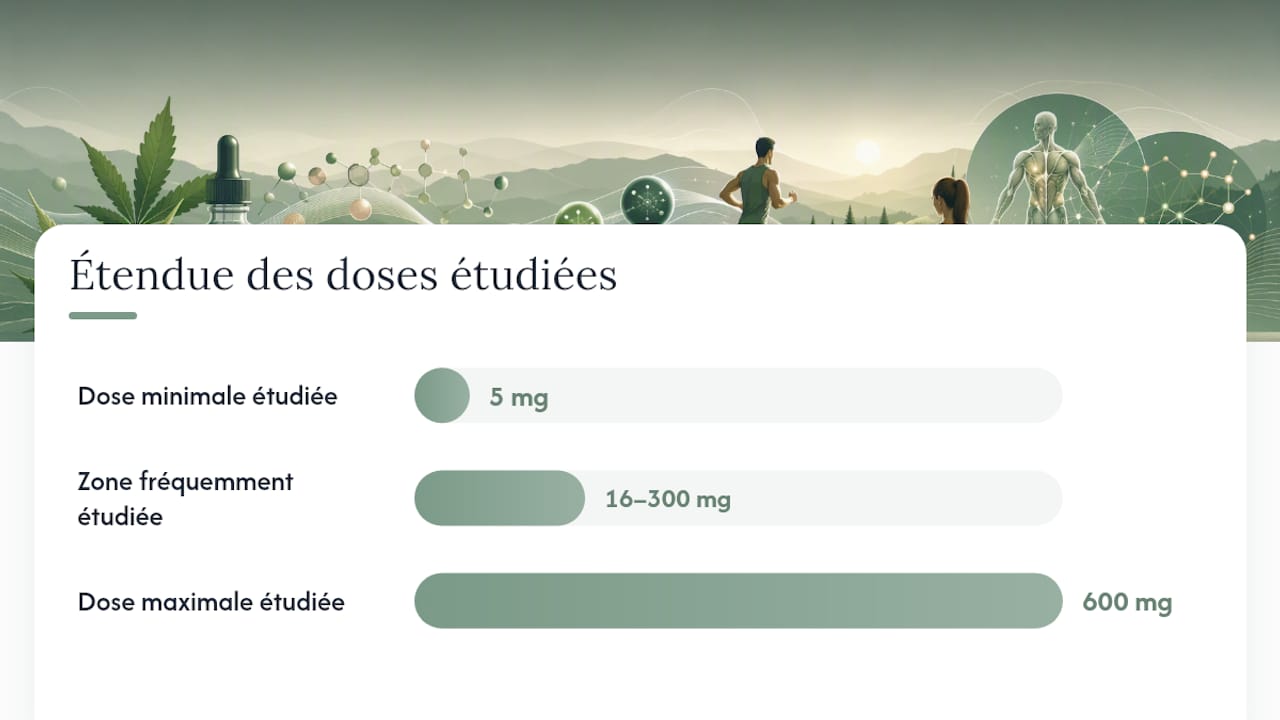
What forms and doses of CBD have been tested for recovery after sport?
Available studies use various forms of cannabidiol: oils, capsules, oral formulations or products for local application.
Doses also vary greatly according to the protocols. Therefore, there is currently no universal dose to say that an accurate amount of CBD systematically improves muscle recovery.
The bioavailability of CBD may vary depending on the form used and the method of administration. This may partly explain the differences observed between studies.
It is therefore preferable to consider the doses studied as research data and not as a personalized recommendation.
Is the CBD safe for an athlete, and what do you need to know about anti-doping risks?
CBD is generally considered to be different from other cannabinoids in cannabis, including THC. However, commercial products may contain several cannabinoids and the actual composition may vary depending on their quality and manufacture.
For an athlete subject to anti-doping rules, this issue is particularly important. The World Anti-Doping Agency allows cannabidiol, but other cannabinoids can remain banned in competition.
Official CBD and sport recommendations should be consulted prior to use when anti-doping controls are likely to occur. See Anti-Doping Recommendations .
Adverse reactions may also occur with CBD, including depending on the dose used, associated medicines or individual characteristics.
Caution is therefore recommended, especially for athletes who are already taking medicines or dietary supplements.
How to test CBD for your own muscle recovery?
If you want to assess the interest of CBD in your own recovery routine, it is best to take a gradual and structured approach.
1. Set your goal
Before you start, identify what you want to see: muscle pain, curvature, sleep quality, recovery sensation or comfort after training.
2. Change only one parameter at a time
If you simultaneously change your diet, training schedule, sleep and supplements, it becomes difficult to determine what explains any improvement.
3. Follow your feelings
Regularly note your level of fatigue, muscle pain, sleep quality and general perception of recovery.
4. Compare on several sessions
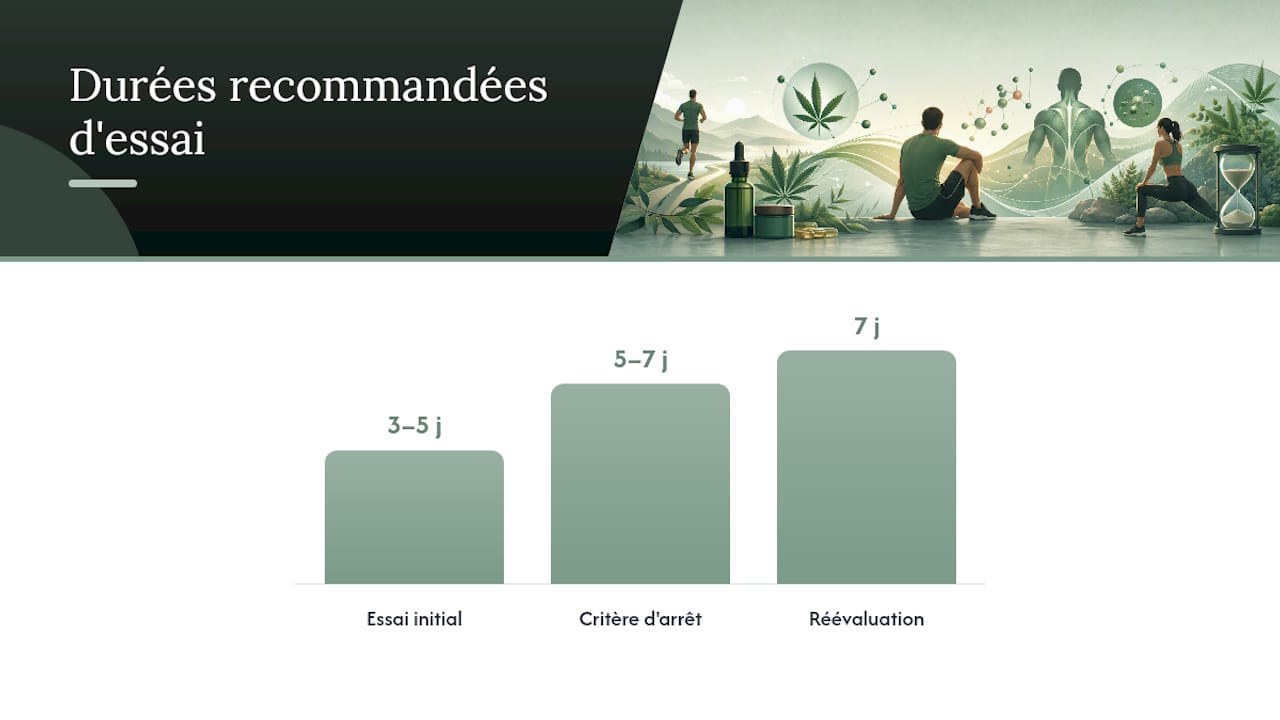
A single session is not usually enough to draw a conclusion. Repeated observation makes it possible to better identify a possible trend.
What field experience teaches us, beyond clinical trials
Athletes can report positive effects on their recovery sensation, relaxation or sleep after using CBD.
These testimonies may be interesting to identify research leads, but they do not replace the results of controlled clinical trials.
However, the perception is relevant when assessing a recovery strategy in its own routine, provided that it is observed in a regular and structured manner.
Where to find a reliable CBD to accompany your recovery?
Product quality is an essential element when an athlete wants to use CBD. In particular, it is important to check the composition, traceability and analyses available.
At Cbd-certified, each product is selected with particular attention to quality, composition and transparency.
The choice of a product must also take into account the athlete's profile, objective and possible exposure to anti-doping controls.
Sources
Nutrition — scientific journal on cannabidiol and sport: https://doi.org/10.3390/nu16172840
Study on CBD and post-exercise recovery: https://www.revistas.una.ac.cr/index.php/mhsalud/article/view/20144
Cannabidiol's effectiveness in post-exercise recovery: View post
Scientific article available on PubMed Central: See article
Publication available on PubMed : See PubMed
Springer Scientific Publication: See publication
UK Anti-Doping — CBD/cannabidiol: See recommendations
Recommendations
To deepen the subject of CBD and sport, it is possible to consult the specialized resources dedicated to the different forms of CBD, its bioavailability and the nutrition of athletes.
- The CBD for Sport
- Sports more suited to CBD consumption
- Bioavailability of CBD and optimisation of its absorption
- Dietetics adapted to athletes