


CBD resin tasting tips: practical guide 2026
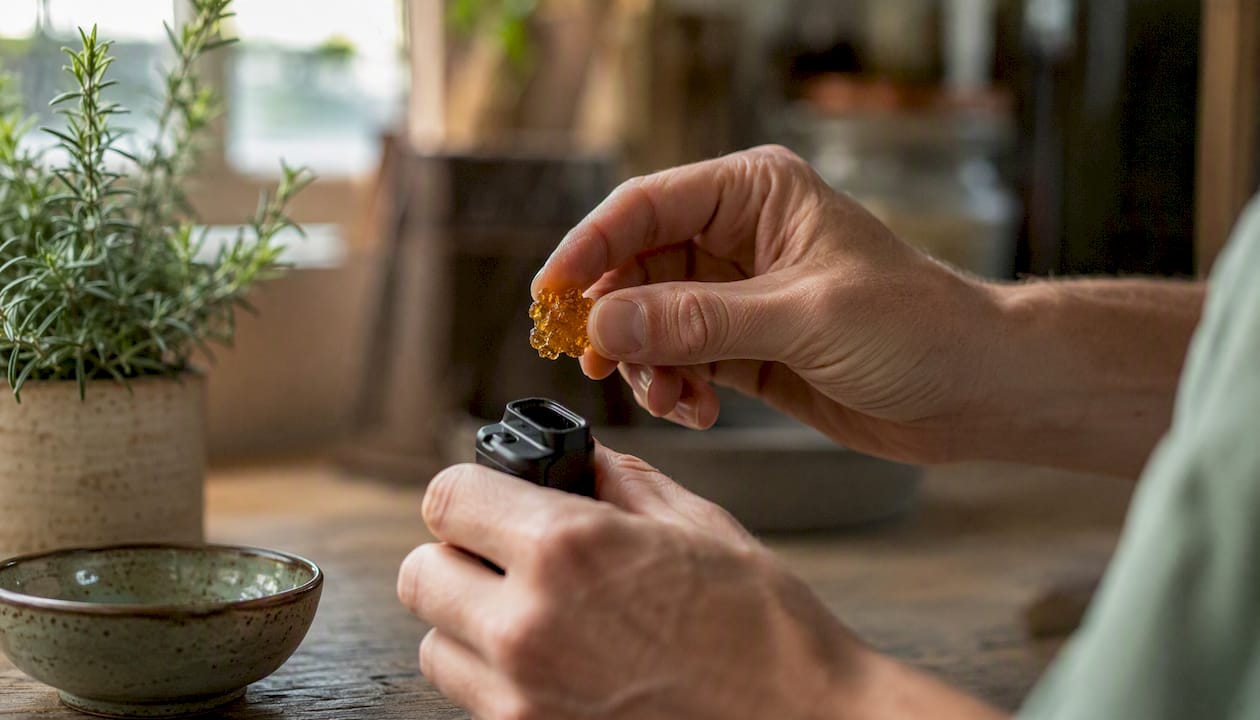
The best way to appreciate a CBD resin is to spray it at low temperature, between 170 °C and 210 °C, to preserve terpenes and micro-doser accurately. Here are the essential steps to be taken at your next session.
Immediate priorities:
- Prepare the resin Frost a quantity equivalent to one grain of rice (approximately 0.05–0.1 g); If it is too sticky, spend it 10 minutes in the refrigerator before handling it.
- Set the temperature : start at 170–180 °C for aromas, gradually climb up to 200–210 °C for effect.
- Initial dose : 5–10 mg CBD equivalent is enough to start; resin is a much more powerful concentrate than flower.
- Wait between the catches : 45–60 minutes minimum before reassessing the effect and adjusting.
- Keep it right : a sealed opaque glass container, sheltered from heat and light, preserves terpenes and cannabinoids.
- Check compliance Since May 2026, the food uses of CBD have been regulated by the Novel Food Regulation in France; vaporization remains the commercially safe route.
To be remembered now: start low in dose and temperature, preserve the terpenes, and always wait until the effect rises before starting again. These three reflexes make the difference between a successful session and a disappointing experience.
Key points
Low temperature spraying between 170 °C and 210 °C remains the most suitable method for accurately tasting and measuring CBD resin, preserving terpenes and controlling the effect.
| Dot | Details |
|---|---|
| Vaporization temperature | Start at 170–180°C for aromas, rise to 210°C for effect. |
| Initial dose | One grain of rice (0.05–0.1 g) is enough to start; Wait 45–60 minutes before you start again. |
| Decarboxylation | Preheat to 110 °C for 20–40 min to activate CBD before any recipe. |
| Quality control | Require a laboratory COA indicating CBD, THC and no contaminants. |
Table of Contents
- What methods to consume CBD resin according to your goal?
- How to analyse aromas, texture and terpenes during a tasting?
- How to prepare the resin and choose the right material?
- Decarboxylation and home recipes: instructions for use and dosage
- Dabbing and advanced methods: how can we proceed safely?
- How to check the quality of a resin and keep it?
- Risks, interactions and legal framework in France
- Why does the consumption method change the effect felt?
- Why responsible tasting is the only approach
- Sources
What methods to consume CBD resin according to your goal?
Each consumption method offers a different effect profile, action speed and sensory experience. Here's how to compare them to choose the one that fits your situation.
Spraying (recommended for tasting) It is the method that best preserves terpenes and allows accurate temperature control. The 170–210 °C range is ideal: below 180 °C, aromas dominate; above 195 °C, the extraction of cannabinoids increases. The effect appears in a few minutes and lasts 2–3 hours.
Dabbing Advanced technique using a heated rig and banker. Very effective for experienced users, but temperature management is more difficult. Low temperature dabbing (between 175 °C and 230 °C) preserves terpenes; Beyond that, the flavor is rapidly deteriorating.
Ingestion (infusions, butters, oils) The effect takes 1-2 hours to manifest and can last up to 6-7 hours. Digestive bioavailability is more variable than inhalation. Since May 2026, commercial food uses have been regulated by the Regulation Novel Food in France.
Sublinguale A few drops of oil or a fragment of resin dissolved under the tongue: absorption is faster than in conventional ingestion (15–45 minutes) and partially bypasses liver metabolism.
Combustion (to be avoided) Mixing resin with tobacco or pure smoking destroys much of the terpenes and generates harmful compounds. This method is not recommended for tasting or for health.
Pro Council: For a first session, opt for the vaporization with temperature steps. You will clearly perceive the aromas at low temperature before the extraction of cannabinoids takes over at high temperature.
CBD resin usually displays 20–40 % CBD, against 4–18% for a classic flower. This high concentration justifies much smaller doses and a gradual approach, regardless of the method chosen.
How to analyse aromas, texture and terpenes during a tasting?
A CBD resin tasting is prepared as a wine or tea tasting: the sensory examination begins even before the first inhalation.
Steps of a tasting session
- Visual and tactile examination : observe the color (gold, brown, green depending on type), shine and malleability. A quality resin is flexible at room temperature, without traces of mould or chemical odour.
- Drainage and preparation : Gently crush a small amount between your fingers. Body heat is generally sufficient; If the resin is too hard, warm it slightly with your breath.
- First level (170–180 °C) : charge the spray and start low. Inhale slowly, hold 2–3 seconds, expire. Note the aromas: earthy, floral, citrus?
- Assessment break Wait 2–3 minutes between each landing to isolate sensations.
- Second level (185–195 °C) : the heavier terpenes express. Myrcene (terrestrial, musk) is released around 167 °C, limonene ( citrus fruit) around 176 °C, pinene (pin, freshness) at 155 °C.
- Third level (200–210 °C) : Cannabinoid extraction reaches its maximum. The aroma becomes denser, sometimes slightly oaky.
Aromatic profiles to be identified:
- Myrcene: earthy notes, mango, slightly spicy
- Limonene : lively citrus, lemon, orange
- Pinena: pine, forest, mint freshness
- Linalol: floral, lavender, slightly sweet
- Caryophyllene : black pepper, spices, woody
Pro Council: use a capsule or hemp fibre pad in your spray. The resin does not directly touch the heating grid, which preserves the purity of the aromas and facilitates cleaning.
How to prepare the resin and choose the right material?
The preparation directly conditions the quality of the tasting. A poorly prepared resin crushes the material and alters the flavors.
Texture-based techniques
- Sticky resin Place it in the refrigerator for 10 minutes in its original packaging. It hardens slightly and crumbles more easily.
- Resin too hard Heat it between the palms or with your breath for 30 seconds. Avoid any direct heat source that would degrade the terpenes.
- Quantity per session : 0.05–0.1 g is a good basis for spraying, about the size of a grain of rice.
Recommended equipment
- Concentrated compatible sprayer Choose a model with ceramic or stainless steel chamber, compatible with resins and concentrates. Portable convection models offer good temperature control.
- Dosing capsules : small metal or ceramic capsules that welcome the resin and insert into the room. They protect the grid and simplify cleaning.
- Hemp fibre pads : natural alternative to the capsules, they absorb the melted resin and spread the steam evenly.
- Rig de dabbing with banger in quartz : for advanced users. Quartz rises rapidly and preserves aromas better than titanium.
- E-nail : electronic temperature controller for rig, which maintains stable and reproducible heat.
Maintenance of equipment
Clean the heating chamber after each session with a cotton swab soaked with isopropyl alcohol. Residues of carbonized resin alter the taste of subsequent sessions and reduce the lifetime of the device. A clean material, it is a preserved flavor at each use.
Pro Council: Never place the resin directly on the heating grid of a conventional spray. Use a capsule or pad systematically to avoid soiling and burning tastes.
Decarboxylation and home recipes: instructions for use and dosage
Before cooking with CBD resin, a step is essential: decarboxylation. It converts the CBDa (acid form, inactive) to active CBD by applying heat.
Decarboxylation procedure
- Preheat the oven to a moderate temperature around 110 °C.
- Put the resin on a sheet of baking paper placed on a plate.
- Bake for a suitable time, usually between 20 and 40 minutes depending on the texture.
- Let cool completely before handling or incorporating into a recipe.
Without this step, the resin incorporated into a butter or oil will remain little active, even after a long infusion.
Simple recipes to test
Butter infused with CBD: Melt 100 g butter over very low heat, add the crumbled decarboxylic resin, hold at 60–70 °C for 30 minutes stirring, filter and let cool.
Infused coconut oil: Same principle with coconut oil (rich in saturated fats that fix cannabinoids well). Ideal for sweet preparations or homemade capsules.
Moon milk at CBD: Heat 200 ml of vegetable milk (oats, almond) at a maximum of 60 °C, incorporate a small amount of infused butter, add cinnamon and turmeric. To be consumed in the evening to promote relaxation.
Indicative dosing benchmarks
| Profile | CBD equivalent per socket | Waiting period before recovery |
|---|---|---|
| Beginner | 5–10 mg | Minimum 2 hours |
| Intermediate | 10–20 mg | 1.30 a.m. |
| Regular | 20–40 mg | 1 hour |
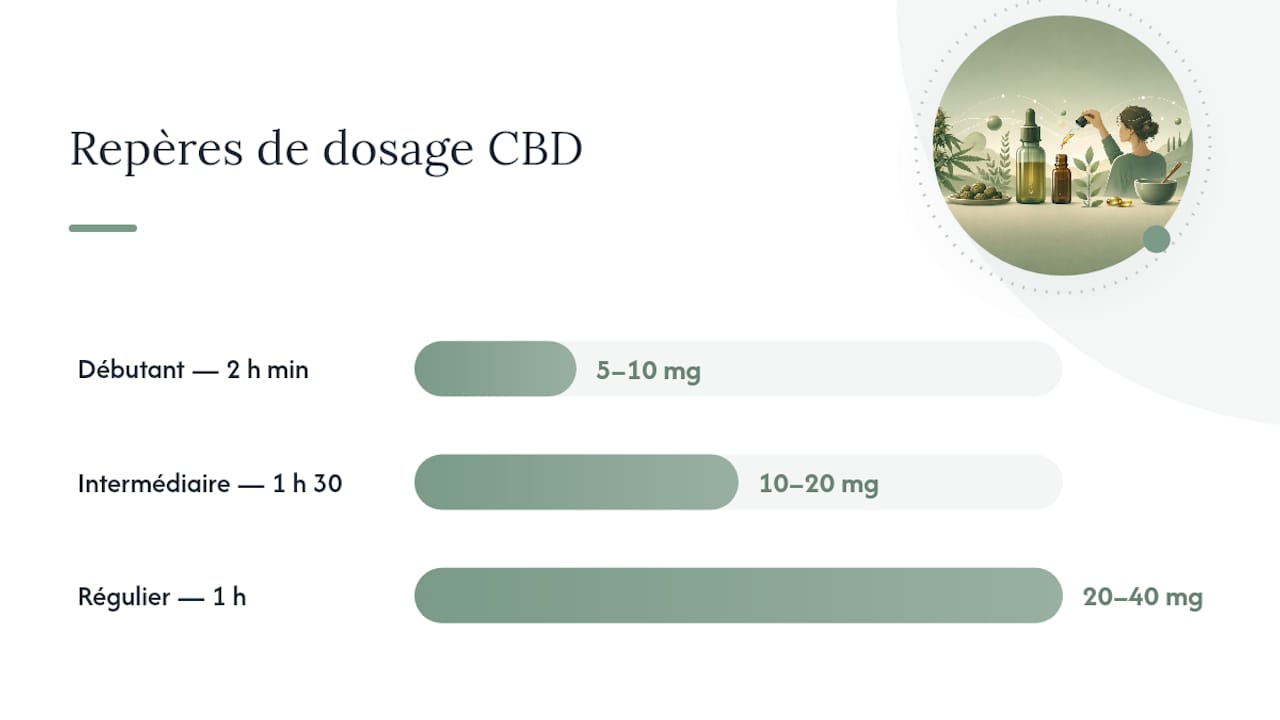
Attention: These benchmarks are indicative. Always start with the lowest dose.
Since May 2026, the marketing of CBD food products has been regulated by the strengthened application of the Novel Food Regulation in France. Personal household revenues remain in a different context from commercial sales, but regularly check the evolution of regulation. In case of medication, consult a health care professional before taking CBD.
Dabbing and advanced methods: how can we proceed safely?
Dabbing consists of spraying a concentrate on a heated surface (the banker) using a rig. It is the method that offers the most dense steam and the most immediate effect, but it requires precise control of temperature.
Equipment required:
- Dab rig glass (compact size recommended to preserve aromas)
- Quartz banana (better taste neutrality than titanium or ceramic)
- Carb cap to control air flow and lower vaporization pressure
- Timer or e-nail to control the heating time
- Dabbing tool (dab tool) in stainless steel or glass
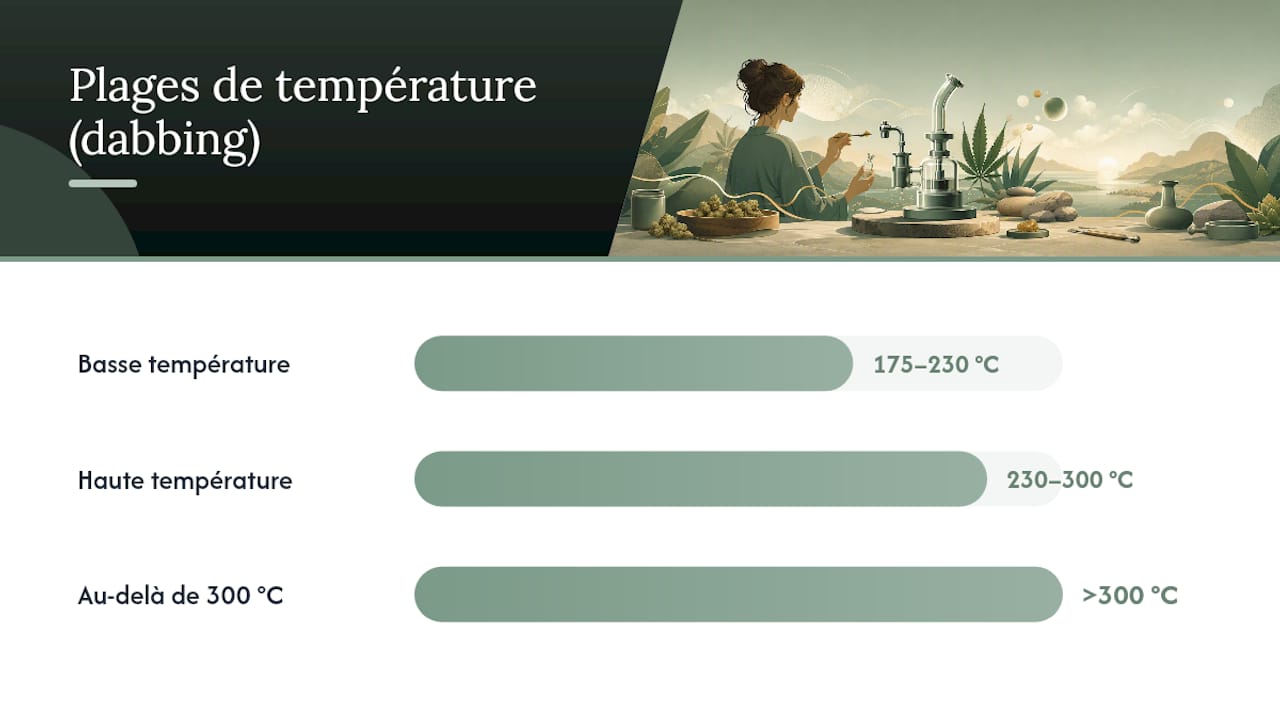
Temperature ranges for dabbing:
- Low temperature (175–230 °C) : soft steam, preserved aromas, moderate effect. Ideal for tasting.
- High temperature (230–300 °C) : dense steam, more intense effect, but degradation of terpenes and risk of burning taste.
Above 300 °C, some compounds degrade into unwanted by-products. Low temperature dabbing is systematically recommended for anyone wishing to appreciate the aromatic profile of a resin.
Pro Council: Heat the banger in red, then wait 45–60 seconds for it to come down at low temperature before applying the resin. Use an infrared thermometer for accuracy.
Essential precautions:
- Ventilate the part correctly: even without combustion, concentrated steam can be irritating.
- Do not exceed small amounts per session, especially at the beginning.
- Dabbing is not suitable for beginners or people sensitive to the effects of concentrated CBD.
- Never drive after a dabbing session.
How to check the quality of a resin and keep it?
A quality CBD resin is recognized before it is consumed. A few simple tests and reading a certificate of analysis are enough to avoid bad surprises.
Quick quality tests
- Bubble test Lightly heat the resin with a flame. Pure resin makes regular bubbles and burns clean. Crepitations, a black flame or a chemical odour indicate contaminants.
- Visual test : homogenous colour, soft texture at room temperature, absence of visible mould or solvent odour.
- Reading COA : the Certificate of Analysis (COA) issued by an independent laboratory indicates the level of CBD, THC (also less than 0.3% in France), the absence of pesticides and residual solvents. Without accessible COA, do not trust the product.
- Concentration displayed : a resin can legitimately display 20–40 % CBD. Beyond 50–60%, systematically request the corresponding laboratory analysis.
To further develop the visual evaluation criteria, the guide on steps to extract CBD resin explains how the extraction method (Ice-o-Lator, dry sift, CO2) directly influences purity and aromatic profile.
Optimal storage
Light, heat and oxygen rapidly degrade terpenes and cannabinoids. For keep the resin correctly, respect these conditions :
- Hermetically tinted glass container (avoid plastic that can alter aromas)
- Stable temperature, ideally between 15 °C and 20 °C
- Safe from direct light and moisture
- For tasting portions: prepare small separate containers to avoid opening the main stock at each session
A well preserved resin retains its properties for several months. The first signs of degradation are a dull odor, an abnormally seffrite texture and a loss of shine.
Risks, interactions and legal framework in France
Consumption of CBD resin in France involves knowing some legal and sanitary realities that general public guides often ignore.
Traces of THC and salivary tests:
- Even legally, a CBD resin contains up to 0.3% THC. In regular consumers, these traces can accumulate in fat tissue and remain detectable for several days.
- Salivary tests used during road checks in France detect THC, not CBD. A positive result remains possible even with a product that complies with the regulations.
- Never drive after a spraying or dabbing session, regardless of the dose.
Drug interactions:
CBD is metabolised by cytochrome P450 enzymes, the same as many common drugs (anticoagulants, antiepileptics, some antidepressants). If you are taking treatment, consult your doctor before adding CBD resin to your routine.
Legal framework in 2026:
- The sale of CBD resin for spraying is permitted in France subject to a THC rate of less than 0.3%.
- Since May 2026, the enhanced application of the Novel Food Regulation has restricted the marketing of CBD food products. Serious shops have adapted their offer accordingly.
- Personal uses at home (receipts, infusions) remain within a separate framework of commercial sales, but regulations are evolving: check official updates regularly.
Practical recommendations:
- Always start at the lowest dose and wait until the effect rises before starting again.
- Avoid consumption if you are pregnant, breastfeeding or have a history of psychiatric disorders.
- Keep products out of reach of children and animals.
This information is general and does not replace the opinion of a healthcare professional. Consult a doctor for questions about your personal situation.
Why does the consumption method change the effect felt?
The route of administration determines both the rate of onset of the effect and its duration. Understanding these differences makes it possible to adapt the method to your need of the moment.
Lung (vaporization, dabbing)CBD passes directly into the blood via the pulmonary alveoli. The effect appears in 2–10 minutes and lasts about 2–3 hours. Bioavailability is higher and more predictable than ingestion.
Digestive (ingestion)CBD passes through the digestive system and liver before reaching the bloodstream. This first hepatic passage reduces the amount of CBD actually absorbed and considerably lengthens the delay: 1–2 hours for climb, 6–7 hours for total duration. This is why the risk of accidental overdose is higher by this way: many people resume a dose thinking that the first did not work.
Sublingual, the absorption is intermediate: 15–45 minutes for the first effects, duration of about 3–5 hours. The oral mucosa absorbs part of the CBD before it reaches the digestive system.
Timing times by method
| Method | Time to appear | Estimated duration |
|---|---|---|
| Spraying | 2–10 minutes | 2–3 hours |
| Dabbing | 1–5 minutes | 2–3 hours |
| Sublinguale | 15–45 minutes | 3-5 hours |
| Ingestion | 1-2 hours | 6-7 hours |
Practical consequences for dosing:
- In vaporization, you can adjust the dose in real time according to the effect felt.
- When swallowing, always wait at least 2 hours before considering a second dose.
- Sublinguale offers a good compromise between speed and duration for daily use.
Why responsible tasting is the only approach
Many CBD resin guides focus on effects or prices. Few dwell on what really makes the difference between a mediocre experience and a memorable session: method, temperature and patience.
The trend towards progressive microdosage is not a beginner's precaution. This is the only way to understand how your body responds to a concentrate whose composition varies from batch to batch.
What strikes me in consumer returns is that the most frequent mistakes do not concern the product itself: they concern impatience. We take a dose too soon, we raise the temperature too fast, we neglect the cleaning of the equipment. Result: burnt flavors, unpredictable effects, and a waste-quality resin.
Sensory tasting, temperature levels, attention to aromas: these are not aesthetic rituals. These are concrete tools to dose just, consume less and appreciate more. And in a rapidly changing regulatory environment, especially with the 2026 Novel Food restrictions, choosing products with verifiable COA is no longer an option, it is the minimum.
Sources
The information presented in this article is based on specialized sources and verifiable technical guides.
- CBD resin: hash, pollen, Piatella — Guide 2026
- CBD resin: consumption patterns and effects
- France to ban CBD editibles under stricter enforcement of EU Novel Food rules
        </article>
    </body>
    </html>